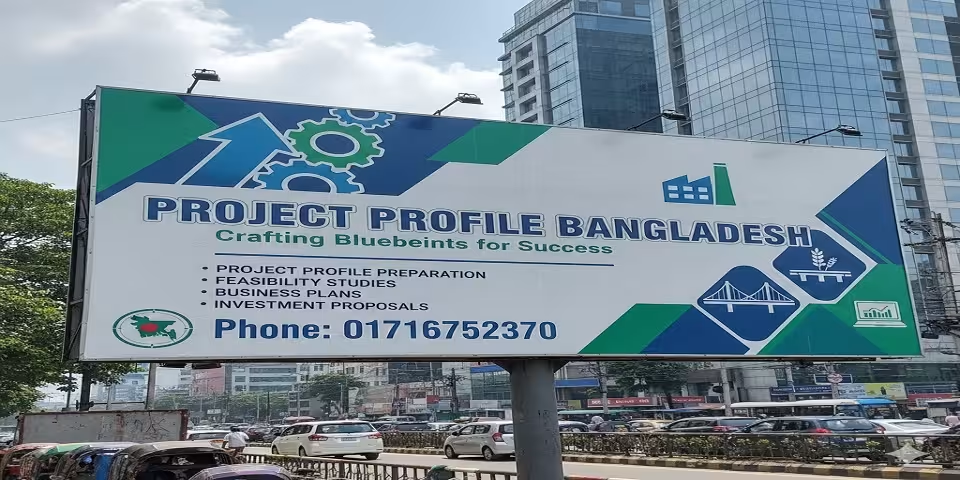
Pre-Engineered Building (PEB) Industry: Project Profiles, Financial Consultancy & Bankable Solutions
Revolutionizing Industrial Infrastructure with Pre-Engineered Building Systems
Modern industrial expansion demands rapid structural deployment because traditional concrete and conventional steel fabrication cannot support surging commercial timelines. Slow construction cycles create severe capital bottlenecks for industrial developers who rely on site-built concrete structures. Rather than expanding horizontal construction schedules, progressive infrastructure projects are accelerating delivery through modern Pre-Engineered Building (PEB) systems. This industrial evolution is driven by the urgent need to protect investments from rising labor costs while simultaneously reducing structural waste. Therefore, commercial developers are embracing factory-fabricated steel infrastructure over conventional brick-and-mortar methodologies.
Building a sustainable PEB manufacturing and fabrication enterprise requires meticulous strategic alignment across every operational phase. While early steel fabricators relied on fragmented job-shop practices, modern commercial PEB plants require exact structural engineering compliance, automated roll-forming lines, and continuous quality assurance loops. Strategic success hinges on securing three core operational pillars: engineered project profiles, bankable financial consultancy, and comprehensive technical advisory services. Investors must establish robust initial blueprints because early factory layout and capacity decisions dictate multi-decade production throughput, yield rates, and overall capital profitability.
Our specialized industrial advisory team delivers comprehensive, end-to-end support for new PEB fabrication ventures and expanding steel structure manufacturing enterprises. Because we combine civil structural planning, banking advisory services, and industrial equipment feasibility, your manufacturing enterprise avoids expensive structural modifications and capital delays. Rather than leaving high-value investments to chance, we empower you to structure every plant zone for maximum structural workflow, strict quality control, and predictable financial returns.
Pillar 1: Strategic Project Profile Preparation for Bankable PEB Success
A comprehensive project profile serves as your primary industrial master blueprint and operational roadmap. While basic pitch decks provide simple executive overviews, a bankable project profile details exact factory floor engineering, crane capacity calculations, electrical utility loads, spatial zoning, and multi-tier production scaling roadmaps. Therefore, commercial banks, industrial development agencies, and credit underwriters evaluate these technical blueprints to verify operational feasibility before approving capital loans.
| Profile Dimension | Structural & Engineering Specifications | Operational & Quality Protocols |
|---|---|---|
| Core Focus | Plant layout, crane bay sizing, & structural load engineering | AWS welding standards, non-destructive testing, & surface prep |
| Infrastructure | High-load reinforced floors, overhead gantry cranes, & power grids | Shot blasting chambers, automated painting bays, & QC yards |
| Growth Strategy | Multi-phase H-beam & C/Z purlin line expansion over 5 to 10 years | Steel coil sourcing, supply chain security, & inventory mapping |
Essential Technical Blueprint Components
- Factory Floor Layout & Crane Bays: Spatial allocation for heavy plate storage, automated cutting lines, assembly jigs, welding stations, and finished structure yards.
- Utility & Structural Load Planning: High-capacity electrical substations, heavy industrial gas piping networks, compressed air lines, and high-tonnage floor loading capacities.
- Quality Control Architecture: ISO 9001 and AWS-compliant inspection zones, ultrasonic testing bays, and blast cleaning environmental containment.
- Production Capacity Forecasting: Multi-stage throughput calculations tailored for primary structural frames (built-up H-beams), secondary structural members (C/Z purlins), and metal cladding sheets.
Strategic factory blueprints resolve operational bottlenecks long before heavy equipment arrives on site. While correct crane clearance and crane bay spans protect workers and streamline raw plate handling, poorly planned factory floors cause material handling delays and expensive production rework. Consequently, investing in a professionally prepared project profile protects your capital while setting clear benchmarks for civil engineering schedules, machinery procurement, and budget execution.
Pillar 2: Financial Consultancy, Risk Modeling, and Bank Loan Guidance
Capital allocation directly determines the long-term commercial survival and scaling capacity of any PEB manufacturing venture. Because setting up a steel fabrication plant involves substantial upfront expenditure on automated built-up beam lines alongside raw steel plate procurement, rigorous financial forecasting remains essential. We construct data-backed financial frameworks that turn complex manufacturing variables into actionable balance sheets.
| Financial Indicator | Manual / Conventional Fabrication Shop | Automated Commercial PEB Facility | Strategic Investor Impact |
|---|---|---|---|
| Initial CAPEX | Lower Equipment Capital Outlay | Higher Automated Line CAPEX | Automated setup requires ~35% higher initial capital investment. |
| Operational OPEX | High Ongoing Manual Labor Costs | Dramatically Reduced Direct Labor | Automation lowers direct fabrication labor costs by up to 55%. |
| Material Scrap Rate | 6% – 10% Manual Cutting Waste | 1% – 2% Precision CNC Nesting Scrap | Automated CNC cutting doubles raw steel plate yield margins. |
| Monthly Fabrication Tonnage | 200 – 400 Metric Tons | 1,200 – 2,500 Metric Tons | High tonnage throughput lowers fixed overhead costs per ton. |
| Capital Payback Period | 48 – 60 Months | 24 – 30 Months | Accelerated ROI driven by high speed, volume, and low scrap rates. |
Securing Commercial Credit with Bank-Ready Proposals
Financial institutions mandate verifiable documentation before disbursing industrial credit facilities or opening machinery import letters of credit. Therefore, our financial consultancy team prepares detailed Cash Flow Projections, Debt-Service Coverage Ratio (DSCR) calculations, and Break-Even Point (BEP) models aligned with international banking benchmarks.
Rather than presenting generic spreadsheets, we stress-test models against real-world economic shocks, such as hot-rolled steel coil price spikes, tariff adjustments, and shifting commercial construction activity. As a direct result, your loan application stands out to credit underwriters, accelerating loan approval timelines while securing competitive interest rates and structured grace periods.
Pillar 3: Technical Feasibility & Machinery Advisory for PEB Manufacturing
Selecting the right production machinery turns raw steel plates and galvanized coils into high-precision structural components. While manual cutting and welding yield inconsistent tolerances and fit-up issues, automated heavy-duty manufacturing lines guarantee exact hole punching, continuous submerged arc welding, and uniform profile dimensions. Consequently, machinery optimization maximizes manufacturing efficiency while lowering total cost per ton.
| Manufacturing Stage | Recommended Primary Equipment | Operational & Engineering Advantage |
|---|---|---|
| Plate Cutting & Prep | Multi-Head CNC Oxy-Fuel & Plasma Cutters | Cuts heavy steel plates with micron-level precision and minimal kerf |
| Primary Member Assembly | Automated H-Beam Assembly & SAW Welding Lines | Continuously welds flange and web plates into structural H-beams |
| Secondary Member Framing | Automatic Interchangeable C/Z Purlin Rollformers | Punches holes and forms purlins with instant profile changeover |
| Surface Treatment | Conveyorized Heavy Steel Shot Blasting Lines | Removes mill scale and rust to prepare steel for long-life coatings |
Core Machinery & Equipment Advisory Scope
- Primary Framing Lines: Automatic heavy-duty H-beam assembly machines, twin-arc submerged arc welding (SAW) gantries, and hydraulic flange straightening machines.
- Secondary Structural Machinery: High-speed automatic C & Z purlin roll-forming machines with inline hydraulic punching and cut-off units.
- Sheet Metal Cladding Lines: Double-deck roofing sheet roll-forming machines, ridge cap benders, and insulated sandwich panel production lines.
- Material Handling & Crane Systems: Heavy industrial double-girder overhead travelling cranes, magnetic lifters, and motorized transfer carts.
- Testing & Painting Equipment: Automated airless spray painting systems, dry film thickness (DFT) gauges, and non-destructive testing (NDT) kits.
Integrated machinery lines create a controlled environment where raw steel plates are efficiently converted into structural frames ready for site erection. While basic workshops struggle with large-span portal frames, automated lines maintain stable fabrication rates day in and day out. Therefore, jobsite fit-up issues disappear, structural safety increases, and your plant maintains high output across every shift.
Technical Quality Assurance and Structural Compliance Standards
Reliable PEB structures depend on strict adherence to international structural engineering codes and welding quality standards. While component fabrication builds the physical frame, rigorous quality control protocols guarantee that every column, rafter, and purlin can withstand severe wind, seismic, and dead loads. Incorporating comprehensive quality management procedures into your project profile reassures investors and regulatory bodies alike.
Critical Quality Control & Manufacturing Validation Stages
- Raw Material Inspection: Verifying mill test certificates (MTC), tensile strength, and plate thickness before cutting.
- CNC Nesting & Cutting Check: Monitoring plate nesting efficiency and dimensional accuracy of web and flange components.
- Submerged Arc Welding Inspection: Continuous visual, magnetic particle, and ultrasonic testing of primary structural welds.
- Surface Preparation Verification: Ensuring shot-blasting achieves SA 2.5 cleanliness standards prior to primer application.
- Pre-Assembly Fit-Up Testing: Mocking up complex frame connections to verify bolt-hole alignments and connection plate angles.
Modern PEB fabrication plants utilize integrated quality management software that tracks every structural member from raw plate to jobsite installation. Rather than relying on sporadic manual checks, automated QA protocols log inspection reports directly to central project management databases. Consequently, your plant achieves uniform structural integrity, meets stringent building code requirements, and minimizes field modification expenses.
Sustainable Plant Utilities, Waste Management, and Environmental Safety
Long-term PEB manufacturing operations must manage industrial noise, steel scrap, welding fumes, and paint emissions responsibly. While unmanaged manufacturing waste creates severe environmental hazards, integrated factory utilities recover valuable steel scrap and protect local air quality.
Environmental and Utility Infrastructure Essentials
- Welding Fume Extraction Systems: High-volume push-pull cartridge dust collectors at all welding and cutting stations.
- Shot Blasting Dust Collection: Closed-loop baghouse filter systems that trap steel dust and recirculate clean abrasive media.
- Paint Spray Booth Filtration: Dry-filter and water-wash spray booths that capture volatile organic compounds (VOCs) and paint overspray.
- Steel Scrap Recycling Conduits: Automated scrap conveyors and compaction units that segregate off-cuts for steel mill recycling.
Proactive environmental controls keep manufacturing plants fully compliant with local industrial pollution boards and occupational safety directives. While uncollected paint overspray risks heavy regulatory fines, automated filtration systems preserve clean indoor working conditions. Therefore, your enterprise minimizes environmental impact, maintains worker safety standards, and reduces overall operational liability.
Why Integrated Solutions Drive Superior Industrial ROI
Managing separate advisory firms for project profile preparation, bank loan consultancy, and machinery selection leads to structural mismatches, extended delays, and capital overruns. In contrast, partnering with a single integrated provider aligns every engineering, financial, and mechanical detail under one unified strategy.
| Execution Pillar | Primary Deliverables | Strategic Business Value |
|---|---|---|
| Project Profiles | Master plant layouts, structural specs, utility schematics | Prevents layout errors & accelerates industrial permits |
| Financial Advisory | Bankable feasibility reports, DSCR & cash flow models | Secures competitive loans & protects operational capital |
| Technical Advisory | Machinery evaluation, line layout, & capacity matching | Ensures high tonnage throughput & minimal line downtime |
Advantages of a Unified Turnkey Consultancy
- Single-Point Accountability: Eliminates disputes between civil designers, financial analysts, and machine vendors.
- Optimized Capital Execution: Ensures equipment selection matches factory utility capacities and bank loan disbursement schedules perfectly.
- Faster Plant Commissioning: Parallel management of facility setup, credit approvals, and machine sourcing gets your plant operational sooner.
- Complete Lifecycle Support: Onsite operator training guidance, quality control setup, and continuous operational advisory.
Combining plant engineering design, bankable financial consultancy, and technical machinery advisory under one unified execution framework guarantees a smooth path from greenfield site to profitable PEB manufacturing. Consequently, your structural steel enterprise achieves faster capital payback, superior fabrication quality, and long-term competitiveness in expanding construction markets.