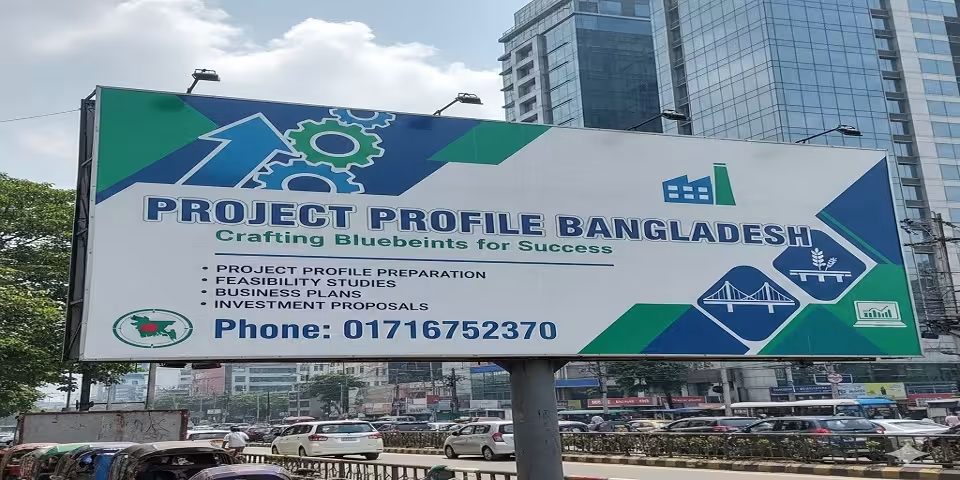
Bankable Project Profile & Financial Consultancy for Garment Accessories & Trimmings Industry
Transforming Garment Accessories Manufacturing Through Bankable Project Planning
Modern apparel manufacturing demands absolute supply chain agility because fast-fashion cycles and export compliance standards cannot tolerate delivery delays. Garment accessories and trimmings—ranging from woven labels, zippers, and metal buttons to elastic webbing, polybags, and hangtags—form the operational backbone of ready-made garment (RMG) exports. Outdated manual production methods create severe delivery bottlenecks for backward-linkage suppliers who attempt to compete in high-volume global markets. Rather than relying on unstructured expansion, commercial accessories manufacturers are scaling operations through automated production lines, modern factory layouts, and bankable financial frameworks. This industry transformation is driven by the urgent need to achieve zero-defect quality standards while meeting tight buyer lead times. Therefore, progressive accessories manufacturers are embracing engineered factory infrastructure, structured project documentation, and professional financial modeling over informal operational planning.
Building a sustainable garment accessories manufacturing enterprise requires meticulous strategic alignment across every business layer. While small-scale suppliers historically relied on informal credit and basic setups, modern export-oriented accessories units demand strict compliance audits, LEAN production flows, and structured capital planning. Strategic success hinges on securing two core structural pillars: professionally engineered project profiles and expert financial consultancy. Investors must establish robust initial blueprints because early factory design choices and credit structures dictate multi-decade operational throughput, export compliance ratings, and overall capital profitability.
Our specialized industrial consultancy team delivers comprehensive, end-to-end support for new backward-linkage entrepreneurs and expanding garment accessories manufacturers. Because we combine technical factory planning, feasibility analysis, and banking advisory services, your project avoids expensive structural modifications, credit rejections, and capital delays. Rather than leaving high-value investments to chance, we empower you to structure every operational zone for maximum manufacturing flow, strict compliance adherence, and predictable financial returns.
Pillar 1: Strategic Project Profile Preparation for Bankable Success
A comprehensive project profile serves as your primary industrial master blueprint and operational roadmap. While basic pitch decks provide simple executive overviews, a bankable project profile details exact factory layout engineering, raw material flow schematics, utility load calculations, environmental safety protocols, and multi-tier production scaling roadmaps. Therefore, commercial banks, industrial development agencies, and international credit underwriters evaluate these technical blueprints to verify operational feasibility before approving project financing.
| Profile Dimension | Technical & Industrial Engineering Specifications | Operational & Compliance Protocols |
|---|---|---|
| Core Focus | Factory layout, machinery placement, & utility planning | Fire safety compliance, environmental management, & LEAN flow |
| Infrastructure | Heavy-duty flooring, HVAC ventilation, & power back-up | Wastewater treatment (ETP), hazardous storage, & worker safety |
| Growth Strategy | Multi-phase production line expansion over 5 to 10 years | Raw material sourcing, backward integration, & export logistics |
Essential Technical Blueprint Components
- Factory Floor Selection and Layout: Spatial separation of raw material warehouses, weaving/knitting bays, dyeing and finishing zones, quality control laboratories, and finished goods logistics.
- Utility Infrastructure Planning: High-capacity industrial steam generators, compressed air networks, uninterrupted power supply (UPS) banks, and continuous water filtration units.
- Compliance and Safety Architecture: Accord/NIRAPADA and OEKO-TEX compliant fire-fighting networks, emergency egress routes, chemical spill containment zones, and ambient temperature management.
- Production Capacity Forecasting: Multi-stage throughput calculations tailored for high-speed needle looms, automatic zipper assembly units, metal button stamping, and flexographic printing presses.
Strategic factory blueprints resolve operational bottlenecks long before machinery installation begins on site. While correct ventilation and floor weight-bearing capacities protect heavy machinery from alignment shifts and operational failures, poorly planned factory layouts cause material handling delays and costly regulatory audit failures. Consequently, investing in a professionally engineered project profile protects your capital while setting clear benchmarks for civil engineering schedules, utility procurement, and budget execution.
Pillar 2: Financial Consultancy, Risk Modeling, and Bank Loan Guidance
Capital allocation directly determines the long-term commercial survival and scaling capacity of any garment accessories venture. Because setting up an export-grade trimmings plant involves heavy upfront capital expenditure on automated machinery alongside high working capital requirements for raw material imports, rigorous financial forecasting remains essential. We construct data-backed financial frameworks that turn complex manufacturing variables into actionable balance sheets.
| Financial Parameter | Unstructured / Small-Scale Unit | Modern Automated Accessories Facility | Strategic Investor Impact |
|---|---|---|---|
| Initial CAPEX | Lower Initial Capital Outlay | Higher Equipment Capital Investment | Modern machinery requires ~35% higher initial capital setup. |
| Operational OPEX | High Ongoing Manual Labor Expenses | Dramatically Reduced Direct Labor Overhead | Automation lowers direct processing labor costs by up to 50%. |
| Material Scrap Rate | 6% – 10% Fabric & Metal Waste | 1% – 2% Precision Production Waste | Automated weaving & stamping double raw material margins. |
| Order Lead Time | 12 – 15 Days Fulfillment | 3 – 5 Days High-Speed Delivery | Rapid turnaround secures lucrative high-margin export orders. |
| Capital Payback Period | 48 – 60 Months | 24 – 36 Months | Accelerated ROI driven by high line efficiency and low scrap rates. |
Securing Commercial Credit with Bank-Ready Proposals
Financial institutions mandate verifiable documentation before disbursing industrial credit facilities, term loans, or import Letters of Credit (L/C). Therefore, our financial consultancy team prepares detailed Cash Flow Projections, Debt-Service Coverage Ratio (DSCR) calculations, and Break-Even Point (BEP) models aligned with national and international banking standards.
Rather than presenting generic spreadsheets, we stress-test models against real-world economic shocks, such as yarn price volatility, metal alloy cost surges, interest rate changes, and buyer payment cycle shifts. As a direct result, your loan application stands out to credit underwriters, accelerating approval timelines while securing competitive interest rates and structured grace periods.
Market Dynamics & Diversity in Garment Trimmings Manufacturing
The garment accessories sector encompasses a diverse array of specialized product categories, each requiring unique technical specifications and machinery setups. A professionally prepared project profile categorizes these distinct sub-sectors to ensure accurate machinery sizing, space allocation, and cost estimation.
| Trimmings Sub-Sector | Key Products Manufactured | Primary Raw Materials Used | Machinery & Processing Focus |
|---|---|---|---|
| Narrow Fabrics & Elastics | Woven/knitted elastic bands, twill tapes, drawstrings | Polyester yarn, rubber thread, spandex, cotton yarn | High-speed needle looms, warping machines, continuous dyeing ranges |
| Zippers & Fasteners | Nylon coil, metal, and plastic molded zippers | Polyester tape, brass/aluminum wire, zinc alloy, plastic resin | Automatic teeth-fixing machines, gapping, slider mounting, ultrasonic welding |
| Labeling & Packaging | Woven labels, printed care labels, hangtags, polybags | Satin/taffeta ribbon, paperboard, LDPE/HDPE granules | Computerized jacquard looms, offset presses, flexographic printing, extrusion lines |
| Metal Trims & Hardware | Snap buttons, rivets, eyelets, metal plates, jeans buttons | Brass, copper, zinc alloy, stainless steel coils | Automatic high-speed punching presses, electroplating lines, auto-attaching tools |
Aligning Technical Feasibility with Buyer Compliance
International garment buyers mandate that all backward-linkage accessories conform to strict ecological and safety benchmarks, including OEKO-TEX Standard 100, REACH, and Global Recycled Standard (GRS) certifications. Our project profile preparation incorporates these mandatory compliance requirements directly into the plant layout and utility schematics.
By incorporating dedicated chemical storage rooms, zero-discharge wastewater management, and lab-testing infrastructure directly into the initial project profile, your facility gains immediate eligibility for top-tier buyer audits. Consequently, your business secures direct supplier listing status with major global apparel brands without requiring costly post-construction retrofits.
Technical Feasibility Studies and Raw Material Sourcing Strategy
Long-term profitability in the accessories sector relies heavily on efficient supply chain management and precise raw material conversion ratios. A comprehensive feasibility study evaluates geographic site selection, proximity to major RMG industrial clusters, utility reliability, and raw material import logistics.
Critical Feasibility Workflow Stages
- Site Assessment & Logistical Mapping: Evaluating proximity to major garment manufacturing zones to minimize delivery transit times.
- Raw Material Supply Chain Analysis: Structuring reliable import channels for synthetic yarns, masterbatches, paperboard, and non-ferrous metals.
- Power & Utility Load Audit: Calculating peak electrical demands, generator redundancy needs, and industrial gas consumption rates.
- Environmental Impact Assessment (EIA): Designing compliance-ready effluent treatment plants (ETP) and exhaust filtration systems.
- Working Capital Cycle Modeling: Structuring back-to-back Letters of Credit (L/C) and working capital credit lines to maintain continuous production.
Detailed feasibility analyses eliminate costly operational surprises after factory construction has commenced. While basic plans overlook peak utility surge demands or local environmental zoning restrictions, our structured project profiles establish rock-solid technical foundations that ensure uninterrupted factory operations.
Why Integrated Project Profiles & Financial Advisory Drive Superior ROI
Managing separate advisory firms for civil factory design, environmental reporting, and banking loan documentation leads to miscommunication, extended delays, and capital overruns. In contrast, partnering with a unified consultancy team aligns every engineering, financial, and regulatory detail under one coherent execution strategy.
| Implementation Pillar | Core Technical Deliverables | Long-Term Commercial Value |
|---|---|---|
| Project Profile Preparation | Master plant layouts, machinery schematics, utility blueprints | Prevents structural design errors & accelerates municipal permits |
| Financial Consultancy | Bankable feasibility reports, DSCR & cash flow models | Secures competitive loans & guarantees liquidity balance |
| Compliance Advisory | ETP design, safety layouts, OEKO-TEX integration | Guarantees rapid buyer audit clearance & continuous export orders |
Advantages of a Unified Consultancy Partnership
- Single-Point Accountability: Eliminates friction between architectural designers, financial modeling experts, and banking underwriters.
- Optimized Capital Execution: Ensures equipment import costs match civil shed dimensions and bank loan disbursement schedules perfectly.
- Faster Factory Setup: Simultaneous management of technical documentation, credit applications, and environmental clearances reduces setup time.
- Complete Lifecycle Support: Ongoing financial advisory, working capital management support, and expansion feasibility studies.
Combining technical project profile preparation with specialized financial consultancy guarantees a smooth transition from initial concept to a profitable, fully compliant garment accessories manufacturing enterprise. Consequently, your business achieves rapid capital payback, superior operational efficiency, and long-term competitiveness in the global RMG supply chain.