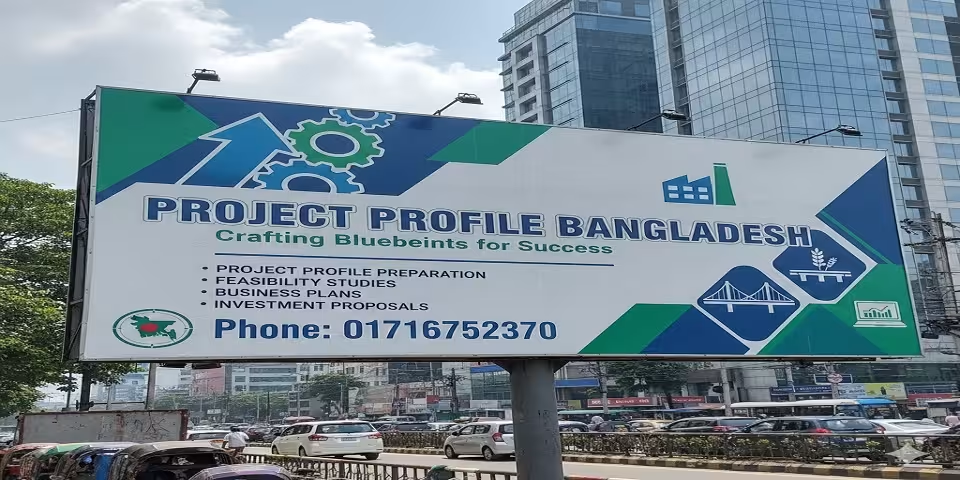
Engineered Wood & MDF Board Industry: Bankable Project Profiles & Financial Consultancy Services
Transforming Agro-Forestry & Manufacturing Through Advanced Engineered Wood Solutions
Modern furniture manufacturing and structural construction demand absolute materials precision because solid timber resources cannot satisfy surging global building needs. Outdated logging reliance and raw wood processing create severe material waste, deforestation pressures, and structural defects for industrial builders. Rather than depending on unpredictable solid wood supplies, commercial building sectors are transitioning upward through engineered wood matrices, composite panel manufacturing, and Medium Density Fiberboard (MDF) production. This industrial evolution is driven by the urgent need to utilize sustainable agro-forestry residues while simultaneously manufacturing uniform, high-density composite panels. Therefore, progressive industrial investors are embracing automated wood defibrators, continuous multi-opening hydraulic presses, and bankable project blueprints over traditional sawmill setups.
Building a profitable engineered wood and MDF manufacturing enterprise demands meticulous strategic planning across every single engineering phase. While small-scale wood workshops relied on basic carpentry, modern commercial panel factories require exact fiber refining parameters, resin-dosing precision, and high-pressure thermal curing. Strategic success hinges on securing two foundational pillars: engineered, bankable project profiles and transparent financial consultancy. Investors must establish robust initial blueprints because early civil design choices, energy plant layouts, and thermal oil utility plans dictate multi-decade panel yields, internal bond strength, and overall capital profitability.
Our specialized industrial advisory team delivers comprehensive, end-to-end support for greenfield MDF plants and expanding commercial engineered wood factories. Because we merge civil factory design, heavy machinery capacity planning, thermal utility modeling, and banking advisory services, your processing enterprise avoids expensive structural modifications and capital delays. Rather than leaving high-value investments to chance, we empower you to structure every factory zone for maximum throughput, strict emissions control, and predictable financial returns.
Pillar 1: Strategic Project Profile Preparation for Bankable MDF & Wood Panel Success
A comprehensive project profile serves as your primary industrial master blueprint and operational roadmap. While basic pitch decks provide simple executive overviews, a bankable project profile details exact factory layout engineering, mega-watt electrical load requirements, wood-chip yard logistics, thermal oil furnace integration, and multi-tier production scaling roadmaps. Therefore, commercial banks, industrial development agencies, and credit underwriters evaluate these technical blueprints to verify operational feasibility before approving capital loans.
| Profile Dimension | Technical & Civil Engineering Specifications | Operational & Quality Control Protocols |
|---|---|---|
| Core Focus | Chipper yard layout, refining tower engineering, & press line design | Formaldehyde emissions control, resin ratio optimization, & sanding tolerances |
| Infrastructure | Heavy civil concrete foundations, thermal oil heater plants, & cyclone systems | Automated continuous weighing, ultrasonic blow-detection, & bending strength tests |
| Growth Strategy | Multi-line expansion roadmaps (MDF, HDF, Particle Board) over 10 years | Sustainable wood-log procurement, bagasse utilization, & regional logistics mapping |
Essential Technical Blueprint Components
- Factory Site Selection and Master Layout: Spatial segregation of raw wood-log yards, debarking channels, wood-chipping stations, refiner towers, continuous hot-press halls, and finished board storage warehouses.
- Utility Infrastructure Planning: High-capacity thermal oil heaters, industrial steam boilers, transformer substations, heavy-duty dust extraction cyclones, and water treatment plants.
- Environmental & Safety Architecture: High-efficiency baghouse dust collectors, wet electrostatic precipitators (WESP), spark detection systems, and fire-suppression conduits.
- Capacity Forecasting: Multi-stage throughput calculations tailored for continuous roll-press or multi-opening hydraulic press lines across 2.5 mm to 25 mm panel thickness ranges.
Strategic factory blueprints resolve operational bottlenecks long before civil contractors break ground on site. While correct refining pressure and thermal curing yield high internal bond strength, poorly planned press lines cause thermal energy loss, excessive resin consumption, and expensive product delamination risks. Consequently, investing in a professionally prepared project profile protects your capital while setting clear benchmarks for civil engineering schedules, utility procurement, and budget execution.
Pillar 2: Financial Consultancy, Risk Modeling, and Bank Loan Guidance
Capital allocation directly determines the commercial survival and scaling capacity of any engineered wood manufacturing enterprise. Because setting up an MDF processing plant involves massive upfront capital expenditure on heavy industrial machinery and thermal utilities alongside continuous raw material (wood logs, bagasse, urea-formaldehyde resin) procurement expenses, rigorous financial forecasting remains essential. We construct data-backed financial frameworks that turn complex manufacturing variables into actionable balance sheets.
| Financial Indicator | Conventional Solid Wood Processing | Automated Commercial MDF Plant | Strategic Investor Impact |
|---|---|---|---|
| Initial CAPEX | Lower Initial Equipment Cost | High Capital Infrastructure Outlay | Continuous MDF plants require significant initial setup capital. |
| Operational OPEX | High Ongoing Manual Labor Expense | Dramatically Reduced Direct Labor Overhead | Automation lowers direct processing labor costs by up to 60%. |
| Raw Material Yield | 45% – 55% Timber Utilization | 85% – 92% Complete Biomass Recovery | Engineered processes convert low-grade branches into premium panels. |
| Product Uniformity | Variable Grain & Structural Defects | 99% Homogeneous Density Profile | Eliminates natural wood knots, splits, and directional swelling. |
| Capital Payback Period | 48 – 60 Months | 30 – 36 Months | Accelerated ROI driven by high daily output and strong market demand. |
Securing Commercial Credit with Bank-Ready Proposals
Financial institutions mandate verifiable documentation before disbursing industrial credit facilities, syndicated loans, or capital equipment import lines of credit. Therefore, our financial consultancy team prepares detailed Cash Flow Projections, Debt-Service Coverage Ratio (DSCR) calculations, and Break-Even Point (BEP) models aligned with international banking standards.
Rather than presenting generic spreadsheets, we stress-test models against real-world economic shocks, such as raw timber supply fluctuations, resin market price spikes, energy tariff changes, and construction sector slowdowns. As a direct result, your loan application stands out to credit underwriters, accelerating approval timelines while securing competitive interest rates and structured grace periods.
Technical Processing Workflows in Engineered Wood & MDF Production
Manufacturing high-grade Medium Density Fiberboard requires a continuous thermo-mechanical process that converts solid biomass into uniform structural sheets. A commercial panel mill must be engineered for smooth operational flow from raw log receiving to automated panel sizing.
| Production Phase | Primary Industrial Equipment | Critical Operational Parameter |
|---|---|---|
| Log Prep & Chipping | Drum Chippers & Rotating Screeners | Uniform chip size (15–30 mm) to ensure equal heat penetration |
| Thermo-Mechanical Refining | Pre-Steam Digesters & Disc Refiners | High-pressure digestion (6–8 bar) to separate wood fibers cleanly |
| Resin Blending & Blowline | High-Pressure Blowline Injectors | Uniform application of UF/MUF resin & paraffin wax onto damp fibers |
| Mat Forming & Hot Pressing | Vacuum Forming Stations & Continuous Hot Press | Precise heat (180–220°C) & pressure to cure resin and compress mat |
| Cooling & Finishing | Star Coolers, Wide-Belt Sanders, & Saws | 24-hour stabilization followed by micron-precise surface sanding |
1. Biomass Preparation & Chipping Phase
Raw hardwood logs, softwoods, or agro-waste materials like bagasse are fed into heavy-duty drum chippers. The resulting wood chips are screened to remove fines and oversized pieces. Clean chips pass through stone washers to remove sand and metallic debris that could damage refining discs and press plates downstream.
2. Fiber Refining & Resin Dosing
Washed chips enter a pre-steaming digester where thermal energy softens the natural lignin binding the wood fibers. The softened chips enter a pressurized disc refiner that mechanically separates the biomass into fine, fluffy wood fibers. Right at the refiner discharge, thermosetting resins (Urea-Formaldehyde or Melamine-Urea-Formaldehyde) and wax emulsions are injected through a high-pressure blowline, ensuring complete micro-coating of every fiber.
3. Mat Forming, Hot Pressing, and Finishing
Resin-coated fibers are pneumatically dried and transported to continuous mat-forming stations. A uniform fiber mat is deposited onto a moving belt, pre-compressed to remove entrained air, and fed into a high-temperature continuous hot press or multi-opening hydraulic press. High thermal pressure activates the resin, fusing the fibers into a dense panel. Freshly pressed boards are rotated on star coolers to relieve internal stresses before passing through multi-head wide-belt sanders to achieve smooth surface tolerances for lamination.
Quality Control, Testing Standards, and Environmental Compliance
Commercial furniture manufacturers and structural builders require strict adherence to international panel standards. Establishing a dedicated Quality Control (QC) laboratory within your project profile guarantees that finished boards comply with global physical and environmental benchmarks.
Essential Laboratory & Compliance Protocols
- Formaldehyde Emission Testing: Desiccator and gas analysis chambers to certify compliance with E1, E0, or CARB Phase 2 emission standards.
- Internal Bond (IB) Strength Testing: Universal mechanical testing machines that pull panel samples apart to verify core resin bonding strength.
- Modulus of Rupture (MOR) & Elasticity (MOE): Three-point bending tests to determine panel load-bearing capacity and flexibility.
- Thickness Swelling & Water Absorption: 24-hour water immersion tests to measure moisture resistance performance.
Rigorous quality control safeguards your brand from panel delamination complaints and expensive product recalls. While unmanaged resin mixing leads to weak cores and high gas emissions, automated resin-dosing systems maintain exact chemical ratios. Consequently, your processing plant produces premium MR (Moisture Resistant) and HDF (High Density Fiberboard) grades that command premium market prices.
Sustainable Environmental Management & Thermal Energy Integration
Engineered wood manufacturing requires significant thermal and electrical energy. Integrating sustainable energy generation and dust control systems directly into your project profile turns wood waste into clean heat while keeping the facility environmental compliant.
Environmental & Utility Infrastructure Essentials
- Thermal Oil Energy Plants: Biomass furnaces that burn sander dust, bark, and trim waste to heat thermal oil for the hot press and refiner pre-steamer.
- High-Capacity Cyclones & Baghouse Filters: Centralized dust extraction systems that collect airborne wood particles across sanding and sawing lines.
- Wet Electrostatic Precipitators (WESP): Advanced scrubbers that remove volatile organic compounds (VOCs) and blue haze emissions from dryer exhausts.
- Closed-Loop Process Water Recycling: Filtration systems that treat and reuse log washing and refiner effluent water.
Proactive environmental design keeps processing facilities fully compliant with local industrial emissions standards. While untreated wood dust poses severe explosive hazards and worker health risks, continuous negative-pressure filtration maintains a clean indoor working atmosphere. Therefore, your enterprise lowers operational risks, cuts fossil fuel costs by burning biomass waste, and protects local ecosystems.
Why Integrated Project Profiles & Financial Advisory Drive Superior ROI
Attempting to coordinate separate civil engineering consultants, financial advisory firms, and machinery vendors leads to communication gaps, budget inflation, and delayed factory commissioning. In contrast, partnering with a specialized industrial advisory team aligns every civil layout, thermal utility design, and financial feasibility metric under one unified strategy.
| Execution Phase | Core Advisory Deliverables | Long-Term Commercial Value |
|---|---|---|
| Project Profiles | Master layouts, civil engineering, thermal utility schematics | Prevents design errors & accelerates industrial building permits |
| Financial Advisory | Bankable feasibility reports, DSCR & cash flow models | Secures competitive loans & guarantees operational liquidity |
| Capacity Planning | Press line sizing, refiner balancing, & energy integration | Ensures high processing efficiency & minimal line downtime |
Advantages of a Unified Turnkey Partnership
- Single-Point Accountability: Eliminates disputes between civil engineers, financial consultants, and machinery importers.
- Optimized Capital Execution: Ensures structural blueprints match heavy press loads and bank loan disbursement schedules perfectly.
- Faster Plant Commissioning: Parallel management of facility setup, credit approvals, and machinery procurement gets your plant operational sooner.
- Complete Lifecycle Support: Ongoing bank compliance monitoring, operational auditing, and expansion planning as your market share grows.
Combining engineered project profile preparation, financial consultancy, and deep engineered wood industry expertise under one unified execution framework guarantees a smooth path from greenfield site to profitable commercial production. Consequently, your MDF enterprise achieves faster capital payback, high market trust, and long-term competitiveness in dynamic building materials markets.